

You love your friends. You genuinely enjoy social events. But lately, the thought of another dinner, another brunch, another group chat planning session makes you want to crawl under your weighted blanket and stay there for a week.
Social fatigue isn't about being antisocial or flaky. It's your nervous system's legitimate response to overstimulation, and it affects young women at particularly high rates due to the constant pressure to be available, responsive, and "on." The good news? You don't have to choose between being a good friend and protecting your energy.
This guide explores practical relaxation strategies that help you manage social exhaustion while maintaining the connections that matter. Because sustainable social life isn't about saying yes to everything or no to everything, it's about creating a rhythm that actually works for you.
Quick Take
- Social fatigue is a physiological stress response, not a personality flaw or sign you need to become a hermit
- Strategic micro-recovery practices between social events can help prevent the buildup that leads to total cancellation mode
- Different types of social interactions drain energy differently, understanding your pattern helps you plan better
- Setting boundaries around digital socializing is just as important as managing in-person commitments
- Building recovery time into your social calendar (not as an afterthought) creates sustainable connection
Why Social Fatigue Hits Young Women Especially Hard
Research suggests that women tend to engage in more emotional labor during social interactions, which requires significantly more cognitive and emotional resources than casual conversation. This includes reading social cues, managing group dynamics, providing emotional support, and maintaining relational harmony. All of this happens largely unconsciously, which means you're expending energy you might not even realize you're using.
Studies show that constant digital connectivity amplifies this effect. The expectation to respond quickly to messages, maintain streaks, engage with social media, and coordinate plans across multiple platforms creates a state of perpetual low-level social activation. Your brain never fully disengages from social mode, which prevents genuine recovery.
Add to this the cultural messaging that young women should be warm, available, and socially skilled, and you have a perfect recipe for burnout. The fatigue you're experiencing isn't weakness, it's your body's signal that the current system isn't sustainable.
Daily Support for Social Drinkers
Your liver works hard every day. Give it consistent support.
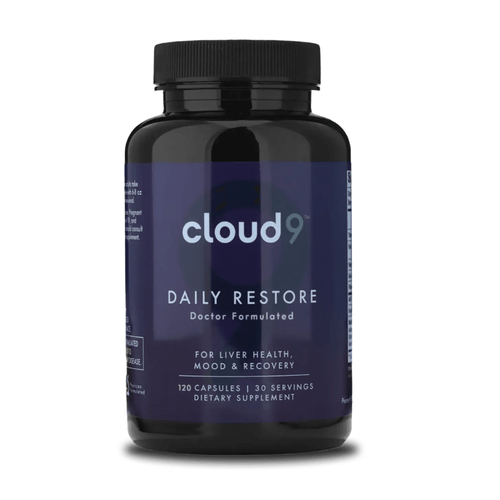
Cloud9 Daily Restore combines NAC, DHM, milk thistle, B vitamins, and ashwagandha to help support the pathways alcohol can tax most. Two capsules daily, drinking or not.
NAC | DHM | Milk Thistle | B Vitamins | Ashwagandha
See How Daily Restore WorksUnderstanding Your Social Energy Pattern
Not all social interactions drain you equally, and understanding your specific pattern is the first step toward managing it effectively. Some people find large groups exhausting but one-on-one time energizing. Others feel the opposite. Neither is wrong, they're just different nervous system responses.
The Four Types of Social Energy Drain
Different social situations tax different resources. Identifying which type you're experiencing helps you choose the right recovery strategy.
| Drain Type | What It Feels Like | Best Recovery |
|---|---|---|
| Sensory Overload | Loud venues, bright lights, crowds feel physically overwhelming | Quiet, dim environment with minimal stimulation |
| Emotional Labor | Managing conflict, supporting friends through crisis, navigating tense dynamics | Activities that don't require emotional regulation (walking, gentle movement) |
| Performance Pressure | Networking events, meeting new people, being "on" and impressive | Time where you don't have to perform or impress anyone |
| Digital Fatigue | Constant notifications, group chats, social media scrolling | Complete device-free time (not just switching apps) |
Tracking Your Social Capacity
Your social energy isn't unlimited, and it doesn't reset instantly. Think of it like a battery that depletes with use and requires specific conditions to recharge.
Try tracking your energy levels for two weeks. Note what types of social activities you do and how you feel 2-4 hours afterward, not just immediately. This delayed response is important because the crash often comes later, making it hard to connect cause and effect.
Micro-Recovery: The Secret to Avoiding Total Shutdown
The biggest mistake isn't overcommitting, it's underestimating how much recovery time you need between social events. Most young women schedule back-to-back social commitments and wonder why they eventually hit a wall and cancel everything.
Micro-recovery practices are brief, intentional rest periods that prevent the accumulation of social fatigue. Research on stress recovery suggests that small, frequent recovery moments are often more effective than occasional long breaks.
Same-Day Recovery Practices
These quick strategies can be done right after (or even during) social events to prevent energy depletion from compounding.
- The 20-minute reset: After any social event, give yourself 20 minutes of complete quiet before jumping into the next thing
- Sensory downgrade: If you've been in a stimulating environment, intentionally reduce sensory input (lower lights, reduce noise, remove tight clothing)
- The car/bathroom pause: Take 5 minutes alone before leaving a venue or immediately after arriving home
- Movement transition: A short walk or gentle stretching helps discharge the physical tension that builds during social interaction
- Hydration and basic needs: Social situations often mean ignoring hunger, thirst, and bathroom needs, address these immediately
Building Recovery Into Your Calendar
The most effective strategy is treating recovery time as non-negotiable calendar blocks, not optional gaps to fill. If you have plans Friday night, don't schedule Saturday brunch, schedule Saturday recovery.
A useful guideline: for every hour of high-drain social activity, plan at least 30 minutes of true solitude. For lower-drain activities, a 1:4 ratio often works. This isn't about being antisocial, it's about being sustainable.
The most sustainable social life isn't about maximizing quantity of connection, it's about maintaining the quality of energy you bring to interactions that matter. Recovery time isn't selfish, it's what makes genuine presence possible.
Strategic Boundary Setting Without Guilt
Setting boundaries around social commitments feels uncomfortable because we've been taught that being a good friend means always being available. But research on relationship satisfaction suggests that quality of interaction matters far more than quantity, and you can't show up with quality when you're running on empty.
The Energy Audit: Deciding What Stays and What Goes
Not all social obligations serve you equally. Some genuinely nourish you (even if they require energy), while others drain without adding value. An honest audit helps you identify the difference.
Ask yourself these questions about each recurring social commitment:
- Do I feel more myself or less myself during this interaction?
- Am I attending out of genuine desire or obligation/fear of disappointing someone?
- Does this relationship feel reciprocal, or am I consistently giving more energy than I receive?
- If this disappeared from my calendar, would I feel relief or loss?
Boundary Scripts That Actually Work
The hardest part of setting boundaries isn't knowing you need them, it's finding language that feels authentic without over-explaining. Here are phrases that communicate limits while maintaining warmth.
| Situation | What to Say |
|---|---|
| Declining an invitation | "That sounds lovely, but I'm protecting my downtime this week. Can we plan something for next month instead?" |
| Leaving early | "I'm going to head out now while I still have energy. This was great, thanks for including me." |
| Limiting digital availability | "I'm doing phone-free evenings now, so I'll respond tomorrow morning." |
| Suggesting lower-energy alternatives | "I'd love to see you, but I'm pretty drained. Would you be up for a walk instead of dinner out?" |
| Postponing when overwhelmed | "I'm hitting my social capacity this week. Can we reschedule for when I can actually be present?" |
Managing Digital Social Fatigue
Group chats, social media comments, and DMs create a particular type of exhaustion because they fragment your attention throughout the day. You're never fully "off" socially, which prevents genuine recovery.
Effective digital boundaries might include designated "response windows" where you batch-check messages rather than staying in constant reactive mode. Many young women find that muting non-urgent group chats and checking them once daily dramatically reduces background social stress.
Creating Your Personalized Recovery Toolkit
Recovery looks different for everyone. What restores one person might not work for another, so building your personal toolkit through experimentation is essential.
Physical Recovery Practices
Social interaction creates physical tension, even when you're enjoying yourself. Your shoulders creep up, your jaw clenches, your breathing gets shallow. Physical recovery practices help discharge this accumulated tension.
- Progressive muscle relaxation: Systematically tense and release muscle groups to reset physical stress patterns
- Restorative yoga poses: Legs-up-the-wall, child's pose, or supported reclined positions signal safety to your nervous system
- Temperature regulation: A warm bath or cool compress can help regulate an overstimulated nervous system
- Gentle movement: Walking, stretching, or slow dancing helps process stress hormones without adding new stimulation
Mental and Emotional Recovery
After heavy emotional labor or cognitively demanding social situations, your brain needs specific types of rest. Scrolling social media doesn't count, that's just different stimulation.
Activities that support genuine mental recovery include: reading fiction that transports you elsewhere, listening to music without multitasking, engaging in repetitive crafts or activities that quiet analytical thinking, or simply staring out a window without forcing productivity.
Environmental Recovery Factors
Your physical environment significantly impacts how quickly you recover. Studies on stress recovery suggest that certain environmental factors consistently support nervous system regulation.
- Reduced visual clutter: A tidy, simple space requires less cognitive processing
- Natural elements: Plants, natural light, or nature sounds can accelerate recovery
- Temperature control: Being too hot or cold prevents deep relaxation
- Comfortable textures: Soft blankets, comfortable clothing, and pleasant tactile experiences support regulation
- Controlled lighting: Dimmer, warmer light signals to your body that it's safe to rest
How Daily Restore Supports Your Health
Understanding what your body needs is one thing. Getting consistent daily support is another. Daily Restore was designed to address the key pathways alcohol can stress most, in one simple daily formula.
NAC (N-Acetyl Cysteine)
Supports glutathione production and antioxidant defenses
DHM (Dihydromyricetin)
Supports alcohol metabolism
Milk Thistle (Silymarin)
Supports healthy liver function
B Vitamins
Help replenish nutrients involved in energy and metabolism
Ashwagandha
Supports stress resilience and healthy cortisol balance
Daily Restore is not a detox or a cure. It is a daily support formula designed for people who drink socially and want to give their body consistent, evidence-informed support.
Frequently Asked Questions
Is it normal to feel socially exhausted even when you enjoy spending time with people?
Absolutely. Social fatigue isn't about whether you like the people you're with, it's about how your nervous system processes stimulation and connection. Even the most enjoyable interactions require mental and emotional energy, and it's completely healthy to need recovery time afterward.
How much alone time do I actually need to recover from social fatigue?
This varies significantly from person to person. Some women feel recharged after 30 minutes of quiet time, while others may need several hours or even a full day. Pay attention to your energy levels and mood, and experiment with different amounts of downtime to find what helps you feel most balanced.
Can supplements really help with stress and social overwhelm?
Research suggests that certain adaptogenic herbs and calming compounds can support your body's stress response over time. While they won't eliminate social fatigue entirely, ingredients like ashwagandha, L-theanine, and magnesium may help promote a calmer baseline, making it easier to navigate demanding social schedules without feeling completely depleted.
What's the difference between being introverted and experiencing social fatigue?
Introversion is a personality trait that describes how you recharge (typically through alone time), while social fatigue is a temporary state of exhaustion that anyone can experience regardless of personality type. Extroverts can absolutely experience social burnout, especially during particularly busy or emotionally demanding periods.
How do I set boundaries without feeling guilty or seeming flaky?
Start by being honest and direct: "I need some downtime tonight, but I'd love to reschedule for next week." Most people appreciate clarity over vague excuses, and protecting your energy actually makes you a better friend in the long run. Remember that saying no to one thing means saying yes to your wellbeing, which ultimately benefits all your relationships.
The Bottom Line
Managing social fatigue doesn't mean becoming a hermit or canceling every plan on your calendar. It means understanding your energy patterns, setting realistic boundaries, and building in recovery time before you hit the point of total exhaustion. When you take a proactive approach to protecting your nervous system, you can actually show up more fully for the connections and experiences that matter most.
Small, consistent practices make the biggest difference. Whether it's a 10-minute breathing exercise before a dinner party, a Sunday morning to yourself, or choosing to skip one event per week, these moments of intentional rest add up. The goal isn't perfection, it's creating a sustainable rhythm that honors both your social life and your need for solitude.
Adding Daily Restore to your routine can provide an extra layer of support for those days when your schedule feels relentless. With calming adaptogens and stress-balancing ingredients, it's designed to help your body maintain steadier energy and a more balanced stress response over time. Think of it as one tool in your wellness toolkit, working alongside boundary-setting, rest, and self-awareness.
Your energy is valuable, and protecting it isn't selfish. It's how you stay present, grounded, and genuinely available for the people and experiences you care about. When you learn to manage social fatigue with intention, you create space for connection that actually nourishes you rather than drains you.
Build Your Daily Support Routine
Build Your Daily Support Routine
If drinking is part of your lifestyle, your support routine should not be random. Daily Restore was designed to help social drinkers support liver health, antioxidant defenses, alcohol metabolism, nutrient replenishment, and daily recovery in one simple routine.
NAC
DHM
Milk Thistle
B Vitamins
Ashwagandha