
You started the week with clear intentions about your drinking. Then Thursday hits, your inbox explodes, and suddenly that glass of wine feels less like a choice and more like a survival tool. Sound familiar?
Life doesn't pause just because you've decided to drink more mindfully. Stress piles up, social obligations multiply, and your well-planned goals can feel impossible to maintain when everything else is falling apart.
The good news: sticking to mindful drinking goals during busy times isn't about perfect willpower. It's about having the right strategies in place before stress hits, so your intentions can hold steady even when everything else feels chaotic.
Quick Take
- Busy periods challenge mindful drinking goals because stress often triggers automatic habits that bypass conscious decision-making
- Creating friction between impulse and action gives your brain time to choose intention over habit, even during hectic days
- Strategic preparation, not willpower alone, helps you navigate high-pressure situations while maintaining your drinking goals
- Social situations during busy times require specific scripts and alternatives ready in advance to reduce decision fatigue
- Small adjustments to your environment and routines can make mindful choices feel easier when mental bandwidth is limited
Why Busy Times Derail Even Strong Intentions
Research suggests that stress and time pressure fundamentally change how we make decisions. When your cognitive resources are stretched thin, your brain defaults to familiar patterns rather than engaging the more deliberate thinking required for new habits. This isn't a failure of willpower; it's basic neuroscience.
Studies show that decision fatigue accumulates throughout demanding days, making it progressively harder to choose the less automatic option. By evening, when many drinking decisions happen, you've already made hundreds of choices about work, family, and logistics. Your brain is genuinely tired of deciding.
The stress response itself can intensify cravings for familiar comfort behaviors. When your body is flooded with cortisol and you're mentally exhausted, alcohol's promise of quick relaxation becomes particularly appealing. Understanding this pattern helps you prepare for it rather than being surprised when busy weeks test your resolve.
Daily Support for Social Drinkers
Your liver works hard every day. Give it consistent support.
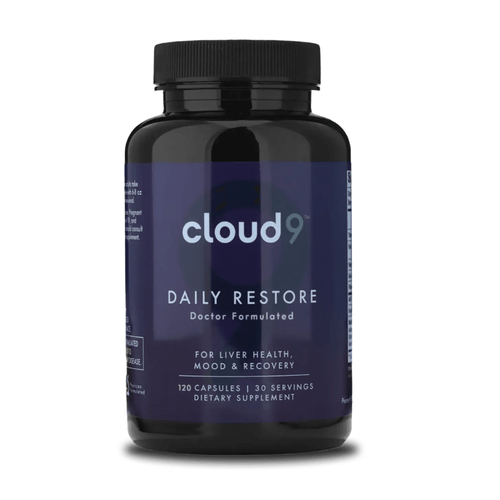
Cloud9 Daily Restore combines NAC, DHM, milk thistle, B vitamins, and ashwagandha to help support the pathways alcohol can tax most. Two capsules daily, drinking or not.
NAC | DHM | Milk Thistle | B Vitamins | Ashwagandha
See How Daily Restore WorksBuild Your Pre-Stress Defense System
The time to strengthen your mindful drinking practices is before life gets overwhelming. Waiting until you're already stressed means making important decisions when you're least equipped to make them thoughtfully.
Identify Your Specific Triggers
Busy periods aren't uniformly difficult. Most people have specific situations that reliably challenge their intentions. Maybe it's back-to-back meetings that leave you drained, tight deadlines that spike anxiety, or social obligations after already-full days.
Spend a week tracking not just what you drink, but what happened in the hours before you reached for alcohol. Look for patterns: which types of stress correlate with which drinking decisions? This information becomes your roadmap for where you need the strongest strategies.
Create If-Then Plans
Implementation intentions, or "if-then" plans, can significantly improve goal adherence during challenging times. These are specific, pre-decided responses to predictable situations that remove in-the-moment decision-making.
Examples of effective if-then plans:
- If I have an overwhelming work day, then I'll take a 10-minute walk before deciding about a drink
- If I'm invited for drinks after work on a weeknight, then I'll order a specific non-alcoholic option first and reassess after finishing it
- If I feel compelled to drink before my planned time, then I'll text my accountability person and wait 15 minutes
- If social pressure feels strong, then I'll use my prepared response: "I'm pacing myself tonight" or "I'm trying something different"
Set Up Your Environment for Success
When mental bandwidth is limited, your physical environment makes decisions for you. The easier choice becomes the default choice, so arrange your space to support your intentions rather than challenge them.
| Environmental Change | Why It Works |
|---|---|
| Move alcohol to less convenient location | Adds friction between impulse and action, creating decision space |
| Place non-alcoholic alternatives at eye level | Makes alternative choices require less cognitive effort |
| Pre-portion servings in labeled containers | Removes ambiguity about "one drink" when decision-making is impaired |
| Keep special glassware for non-alcoholic drinks | Creates ritual and satisfaction without alcohol |
| Stock high-quality alternatives that excite you | Reduces feeling of deprivation that undermines goals |
Navigate High-Pressure Social Situations
Social drinking during busy periods presents a unique challenge: you're already stressed and tired, and now you're also managing other people's expectations and potential judgment. This combination can quickly overwhelm even solid intentions.
Prepare Your Social Scripts
The key to handling social pressure isn't finding the perfect explanation. It's having something ready so you're not improvising when you're already exhausted. Your response doesn't need to satisfy everyone's curiosity; it just needs to end the conversation comfortably.
Effective responses that shut down pressure without creating awkwardness:
- "I've got an early morning" (works regardless of actual plans)
- "I'm trying to sleep better these days" (relatable, not dramatic)
- "I'm good with this for now" (present-focused, doesn't invite future pressure)
- "Not tonight, thanks" (complete sentence, confident tone)
- "I'm being more intentional about when I drink" (honest without oversharing)
The most liberating realization about social drinking: most people care far less about your glass than you think they do. Their brief curiosity passes quickly, especially when you respond with relaxed confidence rather than defensive explanations.
Manage the First 20 Minutes
Research on habit formation suggests that the initial moments of social situations are critical. Once you've successfully navigated ordering and holding a non-alcoholic drink for about 20 minutes, the pressure typically diminishes significantly. Your choice becomes established fact rather than ongoing negotiation.
Strategies for those crucial first minutes:
- Arrive with a plan for exactly what you'll order (decision already made)
- Order immediately and confidently rather than waiting to see what others choose
- Keep your drink in hand to avoid repeated "can I get you something?" offers
- Ask others questions about themselves to shift focus away from your glass
Find Your People
You don't need everyone at an event to support your choices, but having at least one person who understands can make the difference between comfort and constant vigilance. This might be a friend who knows your goals, someone else drinking mindfully, or even someone you connect with in the moment.
During particularly busy or stressful periods, be strategic about which social events deserve your limited energy. It's okay to skip gatherings where you know the alcohol pressure will be intense and your bandwidth to handle it is low. Protecting your goals sometimes means protecting your schedule.
Create Sustainable Stress Management Alternatives
The most common reason people abandon mindful drinking goals during busy times: they haven't developed other reliable ways to manage stress. Alcohol works quickly, which is precisely why it's so tempting when you're overwhelmed. Sustainable alternatives need to work quickly too, or they won't compete.
Build Your Replacement Toolkit
Effective stress management during busy periods isn't about bubble baths and meditation retreats. It's about finding genuinely helpful practices that fit into the five to fifteen-minute windows you actually have available.
Quick-acting stress relief that can compete with alcohol's appeal:
- Five-minute intensive movement (dancing, jumping jacks, stair climbing) to discharge physical stress
- Cold water face splash or shower to activate your parasympathetic nervous system
- Specific breathing pattern: four counts in, seven counts hold, eight counts out, repeated four times
- Texture or temperature sensation: ice cube in hand, soft fabric, stress ball
- Verbal processing: voice memo to yourself or quick call to specific person
- Strategic distraction: engaging video, puzzle, or game that genuinely absorbs attention
Recognize the Difference Between Stress Relief and Decompression
One reason alcohol feels essential after demanding days: you're conflating immediate stress relief with the longer process of truly unwinding. Understanding this distinction helps you match the right tool to the actual need.
| What You Actually Need | Better Than Alcohol | Why |
|---|---|---|
| Transition between work and home mode | 10-minute walk or drive ritual | Creates psychological separation without sedation |
| Physical tension release | Progressive muscle relaxation or stretching | Actually addresses the muscle tension alcohol masks |
| Mental quieting from racing thoughts | Writing down concerns or tomorrow's plan | Externalizes worries rather than numbing them |
| Reward or pleasure after hard day | Specific treat you genuinely enjoy | Provides pleasure without next-day consequences |
| Social connection or conversation | Call or text with specific person | Meets the actual need for connection directly |
Schedule Recovery Time, Not Just Busy Time
When life gets hectic, rest often feels like a luxury you'll get to eventually. But skipping recovery time creates a stress debt that makes mindful drinking goals progressively harder to maintain. Your brain and body need actual restoration, not just sedation.
Even 15-minute recovery blocks strategically placed can significantly reduce end-of-day drinking urges. The key is scheduling them as seriously as you schedule meetings, before your calendar fills completely. Consider these non-negotiable appointments with yourself, not optional if-there's-time activities.
Recover Quickly When You Get Off Track
Even with solid strategies, busy periods may include moments when you drink more than intended or skip your mindful approach entirely. How you handle these moments determines whether they're brief detours or the beginning of abandoned goals.
Ditch the Shame Spiral
Studies on behavior change consistently show that self-criticism after setbacks predicts further deviation from goals, while self-compassion predicts faster return to intended behaviors. Beating yourself up isn't motivation; it's often the precursor to giving up entirely.
When you drink more than planned, your next thought matters enormously. "I've already ruined it, might as well keep going" leads to very different outcomes than "That happened, what do I need to get back on track?" The second response isn't making excuses; it's being strategic about behavior change.
Analyze Without Agonizing
There's a difference between learning from deviations and obsessing over them. Useful analysis asks specific questions that generate actionable information. Unhelpful agonizing just rehearses feelings of failure.
Questions that actually help:
- What specific circumstance led to this decision? (identifies actual trigger, not vague "weakness")
- What was I actually needing in that moment? (reveals unmet need to address differently)
- What early warning sign could I watch for next time? (creates earlier intervention point)
- What environmental or social factor could I adjust? (focuses on changeable elements)
- Which strategy did I skip that might have helped? (identifies preparation gaps to address)
Reset Immediately, Not Monday
The "I'll start fresh Monday" mentality can turn a single deviation into a week-long departure from your goals. Your mindful drinking intentions don't require a clean slate or perfect conditions. They just require your next decision.
Immediate reset might look like: finishing the current drink and switching to water, leaving an event earlier than planned, or doing one of your stress management alternatives right now instead of waiting until tomorrow. Small redirections compound just as powerfully as small deviations do.
How Daily Restore Supports Your Health
Understanding what your body needs is one thing. Getting consistent daily support is another. Daily Restore was designed to address the key pathways alcohol can stress most, in one simple daily formula.
NAC (N-Acetyl Cysteine)
Supports glutathione production and antioxidant defenses
DHM (Dihydromyricetin)
Supports alcohol metabolism
Milk Thistle (Silymarin)
Supports healthy liver function
B Vitamins
Help replenish nutrients involved in energy and metabolism
Ashwagandha
Supports stress resilience and healthy cortisol balance
Daily Restore is not a detox or a cure. It is a daily support formula designed for people who drink socially and want to give their body consistent, evidence-informed support.
Frequently Asked Questions
What should I do if I slip up on my mindful drinking goals during a stressful week?
Treat it as valuable information rather than failure. Identify what triggered the slip, whether it was inadequate planning, emotional stress, or social pressure, and adjust your strategies accordingly. One off-track day doesn't erase your progress: simply recommit to your goals and use what you learned to strengthen your approach moving forward.
How can I maintain my mindful drinking routine when traveling for work?
Pack your support tools just like you would essential work items, including portable supplements like Daily Restore and your preferred non-alcoholic beverages. Research restaurants and hotels at your destination that offer quality mocktails or alcohol-free options, and set clear intentions before networking events about how you'll handle drink offers. Having a plan before you board the plane can help you stay consistent even in unfamiliar environments.
Is it normal for mindful drinking to feel harder during certain seasons or life phases?
Absolutely, and recognizing this pattern is an important part of long-term success. Holiday seasons, major work deadlines, relationship changes, or even seasonal mood shifts can all temporarily increase the challenge. During these predictably difficult periods, you might need to lean more heavily on your support system, increase your self-care practices, or temporarily simplify your goals to maintain momentum without feeling overwhelmed.
How long does it typically take before mindful drinking feels like a natural habit?
Research suggests that habit formation varies widely between individuals, typically ranging from several weeks to several months depending on the complexity of the behavior and personal factors. Most people find that the first few weeks require the most conscious effort, but after that initial period, the new patterns begin to feel more automatic. Consistency matters more than perfection during this formation phase.
Can supplements really help with sticking to mindful drinking goals?
Quality supplements can support your efforts by addressing some of the underlying factors that make moderation challenging, such as stress, cravings, or nutrient depletion. While they're not a magic solution on their own, research suggests that targeted nutrients like DHM, magnesium, and B vitamins may help support mood balance and healthy stress responses. Think of them as one valuable tool in your comprehensive approach rather than a standalone fix.
The Bottom Line
Sticking to mindful drinking goals when life gets busy isn't about achieving perfection or having superhuman willpower. It's about creating simple, sustainable systems that work with your real life rather than against it. The strategies that succeed long-term are the ones you can implement even on your most chaotic days: having alternatives ready, building in accountability, and treating yourself with compassion when things don't go exactly as planned.
Your busy schedule doesn't have to derail your wellness goals. In fact, the structure and intention required for mindful drinking can actually help you feel more grounded during hectic periods. When you're consistent with your approach, you're not just changing your relationship with alcohol: you're building resilience, improving your stress response, and creating space for genuine well-being even when everything else feels overwhelming.
Daily Restore fits naturally into this consistent approach by providing targeted nutritional support that works behind the scenes. Taking it at the same time each day, whether with your morning coffee or evening wind-down routine, creates a simple ritual that reinforces your commitment. The blend of DHM, magnesium, B vitamins, and adaptogens can help support healthy stress responses and liver function, giving your body the nutritional foundation it needs while you handle the mental and emotional aspects of mindful drinking.
Remember that every day you show up for your goals, even imperfectly, is a day you're investing in a healthier, more intentional version of yourself. The effort you put into maintaining mindful drinking habits during your busiest seasons builds the foundation for lasting change that extends far beyond your relationship with alcohol.
Build Your Daily Support Routine
Build Your Daily Support Routine
If drinking is part of your lifestyle, your support routine should not be random. Daily Restore was designed to help social drinkers support liver health, antioxidant defenses, alcohol metabolism, nutrient replenishment, and daily recovery in one simple routine.
NAC
DHM
Milk Thistle
B Vitamins
Ashwagandha