
You've had one of those days. The kind where your shoulders are up near your ears, your mind won't stop spinning, and the idea of a drink sounds like the fastest route to feeling normal again. You're not alone in that impulse, and there's nothing wrong with you for having it.
But here's the thing: while alcohol might feel like it's helping in the moment, it often makes the underlying stress and anxiety worse over time. The good news? There are other ways to calm your mind that actually work with your brain's natural chemistry instead of against it.
Whether you're taking a break from drinking, cutting back, or just looking for healthier ways to decompress, these mental health tips can help you find real relief without the morning-after regret.
Quick Take
- Alcohol disrupts your brain's natural stress-relief systems, often making anxiety worse in the long run
- Simple breathing techniques can activate your parasympathetic nervous system in just a few minutes
- Physical movement, even a short walk, helps metabolize stress hormones more effectively than sedentary coping
- Creating a "calm-down toolkit" gives you reliable alternatives when cravings or stress hits
- Building new habits takes time, but your brain can rewire its response to stress with consistent practice
Why Alcohol Feels Like It Works (And Why It Doesn't)
When you take that first sip after a stressful day, you might feel your muscles relax and your worries fade. That's real, not imagined. Alcohol enhances GABA, a neurotransmitter that slows down brain activity and creates that mellow, relaxed feeling.
But here's what happens next: your brain notices this artificial calm and starts to compensate. It produces less GABA naturally and becomes more excitable to balance things out. When the alcohol wears off, you're left with a brain that's actually more anxious and stressed than before you started drinking.
Research suggests that regular use of alcohol to manage stress can create a cycle where you need more to feel calm, while your baseline anxiety gradually increases. It's not a personal failing, it's just how our neurobiology works when we repeatedly use depressants to manage our emotional state.
Daily Support for Social Drinkers
Your liver works hard every day. Give it consistent support.
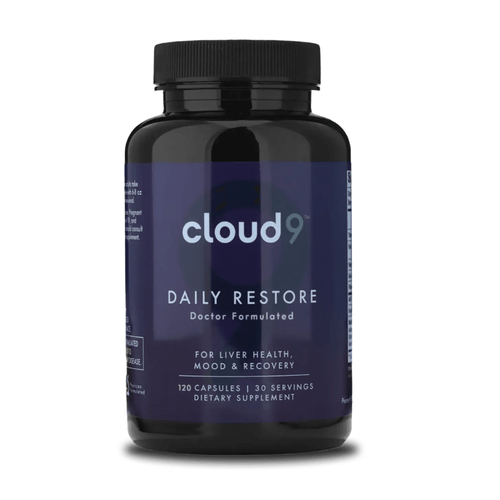
Cloud9 Daily Restore combines NAC, DHM, milk thistle, B vitamins, and ashwagandha to help support the pathways alcohol can tax most. Two capsules daily, drinking or not.
NAC | DHM | Milk Thistle | B Vitamins | Ashwagandha
See How Daily Restore WorksYour Body's Built-In Calm: The Nervous System Reset
Your body already has a sophisticated stress-relief system. It's called the parasympathetic nervous system, and unlike alcohol, it actually helps you recover from stress rather than just masking it.
The Power of Intentional Breathing
This might sound too simple to work, but controlled breathing is one of the fastest ways to shift from fight-or-flight mode to rest-and-digest. When you extend your exhale longer than your inhale, you directly stimulate the vagus nerve, which tells your body it's safe to relax.
Try this: breathe in for four counts, hold for four, breathe out for six, hold for two. Repeat for just three minutes. Studies show this type of breathing can lower cortisol levels and heart rate more effectively than passive relaxation.
Movement That Moves Emotions
When you're stressed, your body is flooded with cortisol and adrenaline, hormones designed to help you run from danger. Sitting on the couch with a drink doesn't give those hormones anywhere to go. Movement does.
You don't need an intense workout. Even a 10-minute walk can help metabolize stress hormones and release endorphins, your brain's natural mood boosters. The key is doing something physical when you feel the urge to drink, not as punishment, but as a genuine alternative that addresses the same need.

Building Your Personal Calm-Down Toolkit
The moment stress hits isn't the time to figure out what to do instead of drinking. That's why having a prepared toolkit of go-to strategies can make all the difference when cravings or overwhelm show up.
Sensory-Based Grounding Techniques
When your mind is racing, bringing attention back to your physical senses can interrupt the anxiety spiral. These techniques work because they activate the present-moment awareness parts of your brain, temporarily overriding the worry circuits.
- Hold an ice cube in your hand and focus on the sensation as it melts
- Put on a song you love and listen to it like it's the first time, noticing every instrument
- Step outside and name five things you can see, four you can hear, three you can touch
- Smell something strong and pleasant: coffee grounds, essential oils, fresh herbs
- Take a hot shower and focus entirely on how the water feels on your skin
The "Instead Of" List
Write down what you're actually looking for when you think about having a drink. The answer is rarely "I want alcohol." It's usually something like relaxation, disconnection from stress, or permission to stop being productive.
Once you know what you're really after, you can find other ways to give yourself that thing. Here's how to match the need with the solution:
| What You're Really Looking For | Healthier Alternative |
|---|---|
| Relaxation and muscle tension relief | Hot bath with Epsom salts, progressive muscle relaxation, gentle stretching |
| Mental escape or distraction | Engaging podcast, absorbing book, creative hobby, video game |
| Permission to stop being productive | Set a timer for guilt-free rest, watch your favorite show, lie down and do nothing |
| Social connection and ease | Text a friend, call someone you trust, join an online community |
| Reward after a hard day | Favorite meal or treat, new episode of a show, small purchase you've been wanting |
The goal isn't to white-knuckle your way through cravings or pretend you don't want relief. It's to find relief that actually works, that doesn't come with a side of increased anxiety, disrupted sleep, and the need to do it all over again tomorrow.
Mind Strategies That Actually Change Your Brain
Beyond immediate calming techniques, there are practices that can actually rewire how your brain responds to stress over time. This isn't about positive thinking or forcing yourself to feel differently. It's about giving your nervous system new information about what safety and calm feel like.
The Mindfulness Approach (Without the Woo)
Mindfulness has become a buzzword, but at its core, it's simple: noticing what's happening right now without trying to change it. Research suggests that regular mindfulness practice can actually shrink the amygdala, the brain's fear center, while strengthening areas associated with emotional regulation.
You don't need to meditate for an hour. Even five minutes of sitting quietly and observing your thoughts like clouds passing by can start to create distance between you and your anxiety. The key is consistency, not duration.
Reframing the Stress Response
Here's something interesting: the physical sensations of stress (racing heart, quick breathing, heightened alertness) are nearly identical to the sensations of excitement. Your brain's interpretation of those sensations makes all the difference.
Instead of thinking "I'm so anxious, I need to make this stop," try "My body is giving me energy to handle this situation." Studies show that people who view their stress response as helpful rather than harmful perform better under pressure and experience fewer negative health effects. This isn't about pretending stress doesn't exist, it's about changing your relationship with it.
The Role of Sleep and Routine
When you're not sleeping well, everything feels harder. Your emotional regulation suffers, your stress tolerance drops, and suddenly that drink seems even more appealing. The problem? Alcohol destroys sleep quality, even if it helps you fall asleep faster.
Creating a consistent bedtime routine signals your brain that it's time to wind down. This might include:
- Dimming lights an hour before bed to support melatonin production
- Keeping your bedroom cool (around 65-68°F works best for most people)
- Avoiding screens for at least 30 minutes before sleep
- Trying a body scan meditation or gentle stretching to release physical tension
- Writing down tomorrow's to-dos so your brain can stop rehearsing them
When to Seek Additional Support
Sometimes self-help strategies aren't enough, and that's completely okay. If you're using alcohol to cope with persistent anxiety, depression, or trauma, working with a mental health professional can provide tools and support that go beyond what you can do alone.
Signs It's Time to Talk to Someone
Consider reaching out to a therapist or counselor if you notice any of these patterns:
- You're drinking more frequently or in larger amounts to get the same calming effect
- Anxiety or low mood persists even when you're not drinking
- You've tried to cut back on your own but keep returning to old patterns
- Stress is interfering with work, relationships, or daily functioning
- You're experiencing panic attacks, intrusive thoughts, or other symptoms that feel unmanageable
Types of Support That Can Help
Cognitive Behavioral Therapy (CBT) is particularly effective for both anxiety and alcohol use. It helps you identify thought patterns that drive both stress and drinking, then build new responses. Many people also benefit from support groups, whether focused on mental health, alcohol use, or both.
The right support looks different for everyone. Some people do well with traditional therapy, others prefer peer support groups, and some find that a combination works best. The important thing is finding something that feels sustainable and helpful for your specific situation.
How Daily Restore Supports Your Health
Understanding what your body needs is one thing. Getting consistent daily support is another. Daily Restore was designed to address the key pathways alcohol can stress most, in one simple daily formula.
NAC (N-Acetyl Cysteine)
Supports glutathione production and antioxidant defenses
DHM (Dihydromyricetin)
Supports alcohol metabolism
Milk Thistle (Silymarin)
Supports healthy liver function
B Vitamins
Help replenish nutrients involved in energy and metabolism
Ashwagandha
Supports stress resilience and healthy cortisol balance
Daily Restore is not a detox or a cure. It is a daily support formula designed for people who drink socially and want to give their body consistent, evidence-informed support.
Frequently Asked Questions
How long does it take to see results from non-alcoholic calming techniques?
Most people notice initial benefits within a few days to a week of consistent practice, though deeper changes often develop over several weeks. The key is consistency rather than perfection: even five minutes of daily breathwork or a nightly magnesium routine can begin shifting your stress response patterns relatively quickly.
Can supplements really replace the relaxation I get from alcohol?
While no supplement can replicate the immediate sedative effect of alcohol, targeted nutrients like magnesium, L-theanine, and GABA can support your body's natural calming pathways without the downsides of disrupted sleep, anxiety rebounds, or dependency. Many people find that combining quality supplements with other wellness practices creates a more sustainable and genuine sense of calm than alcohol ever provided.
What if I've tried meditation or breathing exercises before and they didn't work?
The effectiveness of calming techniques often depends on finding the right approach for your nervous system and sticking with it long enough to see results. If seated meditation feels frustrating, try walking meditation, body scan exercises, or even just three deep breaths before transitions throughout your day: there's no single "right" way to calm your mind.
Is it normal to feel more anxious at first when cutting back on alcohol?
Yes, this is completely normal and typically temporary. Alcohol suppresses your nervous system, so when you stop using it regularly, your body needs time to recalibrate its natural stress response mechanisms. Supporting yourself with calming supplements, hydration, gentle movement, and patience during this transition period can help ease the adjustment.
How do I know which calming technique will work best for me?
The best technique is the one you'll actually use consistently. Start by experimenting with different approaches for a week each: try breathwork one week, progressive muscle relaxation the next, and perhaps a daily supplement routine alongside both. Pay attention to what feels natural and sustainable rather than what sounds most impressive or complicated.
The Bottom Line
Learning to calm your mind without alcohol isn't about willpower or deprivation. It's about building a toolkit of evidence-based practices that actually support your nervous system rather than temporarily masking stress. Whether you choose breathwork, movement, supplements, or a combination of approaches, the goal is finding sustainable strategies that fit into your real life.
The most effective approach is often layered: a morning routine that sets a calm tone for your day, midday practices that help you reset when stress builds, and evening rituals that genuinely prepare your body and mind for restorative sleep. Small, consistent actions tend to create more lasting change than dramatic overhauls that fizzle out after a few weeks.
Cloud9's Daily Restore was designed specifically to support this kind of daily consistency. With calming nutrients like magnesium bisglycinate, L-theanine, and GABA, plus adaptogens that help your body manage stress more effectively over time, it can be a simple, reliable anchor in your wellness routine. Just one capsule daily provides targeted support for the exact physiological pathways that alcohol disrupts.
The truth is, genuine calm comes from working with your body's natural systems, not against them. As you build new habits and give your nervous system the support it needs, you may find that the relaxation you're experiencing feels deeper, more authentic, and infinitely more sustainable than anything that came from a glass.
Build Your Daily Support Routine
Build Your Daily Support Routine
If drinking is part of your lifestyle, your support routine should not be random. Daily Restore was designed to help social drinkers support liver health, antioxidant defenses, alcohol metabolism, nutrient replenishment, and daily recovery in one simple routine.
NAC
DHM
Milk Thistle
B Vitamins
Ashwagandha