

That wedding invitation sits on your counter like a small threat. Your coworker's birthday happy hour. The networking mixer your boss mentioned. Each one triggers the same sinking feeling: a mix of obligation and dread that starts weeks before the actual event.
Social anxiety doesn't always mean avoiding events entirely. Sometimes it means showing up while your mind runs worst-case scenarios on repeat. The good news? You can shift your relationship with these gatherings, transforming them from endurance tests into experiences you might actually enjoy.
These strategies combine what research tells us about anxiety management with real-world tactics that can help you move through events with more ease and less mental exhaustion.
Quick Take
- Pre-event anxiety often feels worse than the actual experience, and preparation can bridge this gap
- Strategic arrival timing and having exit plans reduces the feeling of being trapped
- Small behavioral shifts like body positioning and conversation starters can significantly decrease social stress
- Physical grounding techniques help manage real-time anxiety symptoms during events
- Recovery time after social events is normal and necessary for people with social anxiety
Why Social Events Trigger Anxiety (And Why You Still Attend)
Social anxiety activates your threat detection system in situations where others feel neutral or excited. Research suggests this isn't simply shyness or introversion. It's your brain interpreting social evaluation as a legitimate danger, triggering the same physiological responses you'd have facing actual threats.
The anticipatory anxiety, the dread you feel days or weeks before, often exceeds the difficulty of the event itself. Studies show that people with social anxiety consistently overestimate how negatively others will judge them and underestimate their own social competence. Your brain is essentially running disaster simulations that rarely match reality.
Yet you keep accepting invitations, and that matters. Whether it's professional obligation, genuine desire to connect, or not wanting to disappoint people you care about, you're navigating the tension between avoidance and engagement. That navigation is where growth happens.
Daily Support for Social Drinkers
Your liver works hard every day. Give it consistent support.
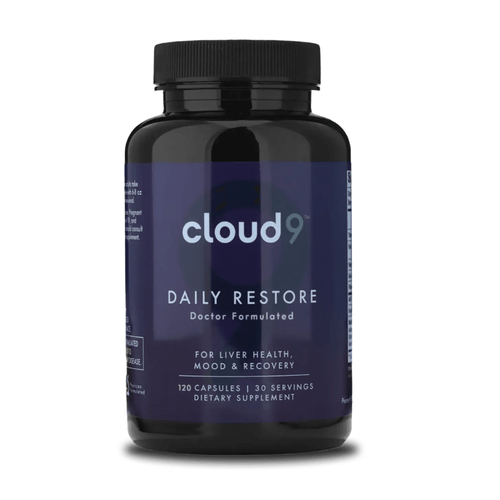
Cloud9 Daily Restore combines NAC, DHM, milk thistle, B vitamins, and ashwagandha to help support the pathways alcohol can tax most. Two capsules daily, drinking or not.
NAC | DHM | Milk Thistle | B Vitamins | Ashwagandha
See How Daily Restore WorksBefore the Event: Preparation That Actually Helps
Reframe Your Relationship With the Event
Instead of focusing on "getting through it," identify one specific, manageable goal. This might be having one meaningful conversation, staying for 45 minutes, or simply observing without pressure to perform. Research on goal-setting suggests that concrete, achievable objectives reduce anxiety more effectively than vague intentions to "do better" or "be less anxious."
Write down what success looks like for this particular event. Not the idealized version where you're charming and effortless, but a realistic win that acknowledges your current capacity.
Strategic Planning Reduces Uncertainty
Uncertainty amplifies anxiety. The more unknowns an event contains, the more your mind fills gaps with worst-case scenarios. Combat this with practical reconnaissance.
- Check the venue layout online if possible, so you know where bathrooms and exits are located
- Confirm the dress code to eliminate one decision point
- Ask the host about expected attendance size and timing
- Identify if there's a structured activity (dinner, presentation) or purely social mingling
- Plan your transportation, including a backup option if you need to leave early
The Pre-Event Routine
What you do in the hours before matters. Avoid caffeine if you're already prone to physical anxiety symptoms. Eat something substantial so low blood sugar doesn't add to your stress. Give yourself extra time so you're not arriving flustered.
Practice a brief grounding exercise 10 minutes before you leave. This might be box breathing (inhale for 4, hold for 4, exhale for 4, hold for 4) or a quick body scan to release tension you're unconsciously holding.
During the Event: Real-Time Strategies That Work
Arrival Timing and Initial Positioning
The "fashionably late" advice doesn't serve social anxiety. Arriving slightly early, when there are fewer people, can actually ease you into the environment. You're not walking into an overwhelming wall of established conversations and energy.
Position yourself strategically. Standing near the food or drink area gives you a legitimate reason to be there and a built-in activity. Positioning yourself at the edge of groups rather than in the center reduces the feeling of being trapped or scrutinized.
| Situation | Higher Anxiety Approach | Lower Anxiety Alternative |
|---|---|---|
| Arrival | Walking in during peak crowd | Arriving early or at a transitional moment |
| Positioning | Center of room with no exit route | Near periphery, close to bathroom or refreshments |
| Conversation joining | Interrupting tight circle mid-discussion | Approaching open groups or helping with tasks |
| Duration | Staying until the end to prove you can | Leaving at your predetermined time regardless |
Conversation Frameworks
The pressure to be interesting or clever feeds anxiety. Instead, focus on being curious. Questions take pressure off you to perform while giving others something they typically enjoy: talking about themselves.
Keep a mental list of open-ended questions that work in most contexts. How did you get involved with [host/organization]? What's been keeping you busy lately? Have you been to one of these before? These require minimal creativity in the moment when your cognitive resources are already taxed.
The goal isn't to eliminate anxiety entirely. It's to prove to yourself that you can function while anxious, that discomfort doesn't equal danger, and that the catastrophe your mind predicts rarely materializes.
Managing Physical Symptoms in Real Time
When your heart races or your hands shake, it's easy to spiral into anxiety about your anxiety. These physical sensations are uncomfortable but not dangerous, and you can work with them rather than against them.
- Hold a cold drink to help regulate your nervous system and give your hands something to do
- Practice subtle muscle relaxation by tensing and releasing your shoulders or jaw
- Shift your weight between feet to release tension and increase grounding
- Take deliberate sips of water to naturally slow your breathing
- Step outside or to the bathroom for a two-minute reset if needed
The Power of Roles and Tasks
Offering to help with something, whether it's refilling ice or clearing plates, serves multiple purposes. It gives you a defined role that feels less vulnerable than pure socializing. It creates natural movement and transitions. It positions you as helpful rather than awkward.
The same applies to engaging with pets, kids, or activities at the event. These parallel forms of engagement can feel more manageable than direct conversation while still keeping you present and participating.
Exit Strategies and Recovery
Knowing When and How to Leave
Having a predetermined exit time reduces the mental burden of deciding in the moment. You're not constantly asking yourself "Can I leave yet?" or feeling guilty about wanting to. You made the decision earlier when you weren't in the middle of managing your anxiety.
Your exit doesn't require elaborate explanations. "I need to head out, but this was great" works perfectly. Thank the host, acknowledge one person you enjoyed talking to, and leave cleanly. Lingering goodbyes often create more anxiety than the departure itself.
Post-Event Processing
The mental replay is normal but can become destructive. You might fixate on perceived mistakes or awkward moments, magnifying them far beyond how others experienced them. Research on post-event processing in social anxiety shows this rumination actually maintains and strengthens anxiety over time.
Set a time limit for reflection. Spend 10 minutes noting what went better than expected or what you learned, then deliberately shift your attention. This isn't suppression, it's intentional refocusing away from rumination patterns that don't serve you.
Recovery Time is Not Weakness
Social events are cognitively and emotionally demanding when you experience social anxiety. Needing time alone afterward to recharge isn't a character flaw. It's acknowledging the real energy expenditure involved in managing anxiety while engaging socially.
Build recovery time into your schedule. If you have a Saturday evening event, keep Sunday morning clear. This prevents the additional stress of having back-to-back obligations when you're already depleted.
Building Tolerance Over Time
Gradual Exposure Works
The goal isn't to immediately love networking events or big parties. It's to slowly expand what feels manageable. Studies on exposure therapy for social anxiety consistently show that repeated, graduated exposure to feared situations reduces anxiety more effectively than avoidance or forcing yourself into overwhelming situations.
Start with events that have built-in structure: book clubs, classes, volunteer activities. These provide conversation topics and defined roles. As these become more comfortable, gradually add less structured social situations.
Tracking Progress Without Perfection
Keep a simple record of events you attend and how they went. Not to judge yourself, but to notice patterns. You might discover that smaller gatherings feel more manageable, or that events with people who share specific interests reduce your anxiety. This information helps you make strategic choices about which invitations to accept.
Notice the gap between your predictions and reality. Your brain told you everyone would judge you, but did they? You thought you'd need to leave after 20 minutes, but you stayed for an hour. These observations slowly reshape your expectations.
How Daily Restore Supports Your Health
Understanding what your body needs is one thing. Getting consistent daily support is another. Daily Restore was designed to address the key pathways alcohol can stress most, in one simple daily formula.
NAC (N-Acetyl Cysteine)
Supports glutathione production and antioxidant defenses
DHM (Dihydromyricetin)
Supports alcohol metabolism
Milk Thistle (Silymarin)
Supports healthy liver function
B Vitamins
Help replenish nutrients involved in energy and metabolism
Ashwagandha
Supports stress resilience and healthy cortisol balance
Daily Restore is not a detox or a cure. It is a daily support formula designed for people who drink socially and want to give their body consistent, evidence-informed support.
Frequently Asked Questions
What if I feel anxious even after trying these strategies?
It's completely normal for anxiety to persist despite your best efforts. Social anxiety can be deeply rooted, and progress often comes gradually rather than all at once. If you find that anxiety continues to interfere with your daily life or prevents you from attending important events, consider reaching out to a mental health professional who can provide personalized support and evidence-based treatment options.
How early should I start preparing mentally for an event I'm dreading?
The sweet spot is typically 2-3 days before the event. Starting too early can lead to prolonged worry and rumination, while waiting until the last minute may leave you feeling unprepared and more anxious. Use this window to visualize positive outcomes, plan your arrival and exit strategies, and establish your support routines, including any daily supplements that help you feel more balanced.
Can supplements really help with social anxiety?
Research suggests that certain natural ingredients, including ashwagandha, L-theanine, and magnesium, may help support a calmer stress response and promote relaxation. While supplements aren't a cure for social anxiety, many people find that consistent daily use can help take the edge off anxious feelings and support overall emotional balance. Think of them as one tool in your anxiety management toolkit rather than a standalone solution.
Is it okay to leave an event early if I'm feeling overwhelmed?
Absolutely, and having an exit strategy can actually reduce anxiety before you even arrive. Knowing you have permission to leave if needed takes pressure off the experience and allows you to be more present. Many people find that once they know they can leave, they often feel comfortable enough to stay longer than anticipated.
How can I explain my social anxiety to friends without making things awkward?
You can keep it simple and direct: "I sometimes feel anxious in social situations, so I might need to step away for a few minutes" or "Crowds make me a bit nervous, but I'm working on it." Most people are more understanding than we expect, and being honest about your needs can actually deepen connections. You don't owe anyone a detailed explanation, just enough context to help them support you if needed.
The Bottom Line
Attending events when you're dealing with social anxiety doesn't have to be an all-or-nothing experience. By preparing mentally, using grounding techniques, setting realistic expectations, and building in recovery time, you can show up more comfortably and maybe even find moments of genuine enjoyment. The goal isn't to eliminate anxiety completely, it's to develop strategies that help you move through it with more ease and confidence.
Consistency matters when it comes to managing anxiety. While event-specific strategies are helpful, supporting your nervous system daily can make a real difference in how you show up when social situations arise. That's where Cloud9 Daily Restore comes in. With calming ingredients like ashwagandha, L-theanine, and magnesium, it's designed to help you build a foundation of calm that carries through challenging moments.
Think of Daily Restore as part of your daily routine, like getting enough sleep or moving your body. When you take it consistently, you're giving your body the support it needs to handle stress more effectively over time. It won't erase social anxiety, but it can help you feel more balanced and resilient as you navigate the events and gatherings life throws your way.
Remember, showing up is already a victory. Every event you attend, even if it feels uncomfortable, is practice. And with the right tools, support, and self-compassion, those dreaded occasions can gradually become less daunting and more manageable.
Build Your Daily Support Routine
Build Your Daily Support Routine
If drinking is part of your lifestyle, your support routine should not be random. Daily Restore was designed to help social drinkers support liver health, antioxidant defenses, alcohol metabolism, nutrient replenishment, and daily recovery in one simple routine.
NAC
DHM
Milk Thistle
B Vitamins
Ashwagandha