

You keep it together during the week, skip the happy hours, and wake up early for your workouts. Then Friday arrives, and suddenly those three glasses of wine or four IPAs feel like a reward you've earned. By Sunday evening, you're wondering why you feel so off, and by Wednesday, you're still not quite yourself.
Here's what most people don't realize: your weekend drinking doesn't stay contained to the weekend. Those two nights of elevated alcohol consumption can trigger a cascade of physiological effects that persist for days, impacting everything from your sleep architecture to your hormone balance to your ability to focus in that Thursday afternoon meeting.
Understanding how alcohol affects your body beyond the immediate hangover can help you make more informed choices about your drinking patterns and overall wellness.
Quick Take
- Weekend alcohol consumption disrupts your sleep quality for 3-5 days, preventing deep restorative sleep even after you feel "recovered"
- Your cortisol and blood sugar regulation can remain affected until mid-week, impacting energy and mood stability
- Cognitive performance, including focus and decision-making, may stay compromised for several days after your last drink
- The gut microbiome experiences disruption that extends well beyond the weekend, affecting digestion and inflammation
- Even moderate weekend drinking can create a weekly cycle of recovery that prevents you from ever feeling fully optimal
The Sleep Disruption That Lasts Long After Your Hangover Fades
Most people know alcohol affects sleep on the night you drink, but research suggests the impact extends much further. While alcohol might help you fall asleep faster initially, it significantly disrupts your sleep architecture, particularly during the second half of the night when REM sleep typically occurs. This disruption doesn't simply resolve the next day.
Studies show that even after the alcohol has left your system, your sleep patterns can remain altered for three to five days. Your body continues to experience fragmented sleep, reduced REM cycles, and increased nighttime waking. You might not consciously wake up, but your sleep tracking data would tell a different story.
This extended sleep disruption explains why you might feel foggy on Tuesday after drinking on Friday and Saturday, even though you got a full eight hours the past two nights. Your brain hasn't had the deep, restorative sleep it needs to consolidate memories, clear metabolic waste, or fully recharge your cognitive systems.
Daily Support for Social Drinkers
Your liver works hard every day. Give it consistent support.
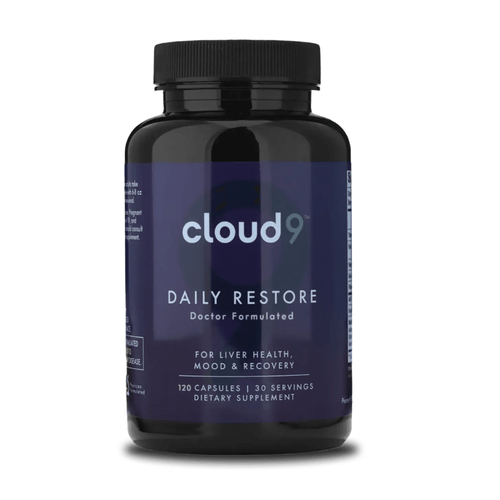
Cloud9 Daily Restore combines NAC, DHM, milk thistle, B vitamins, and ashwagandha to help support the pathways alcohol can tax most. Two capsules daily, drinking or not.
NAC | DHM | Milk Thistle | B Vitamins | Ashwagandha
See How Daily Restore WorksHow Weekend Drinking Creates a Week-Long Stress Response
Alcohol consumption triggers a significant stress response in your body that extends well beyond the immediate hangover period. When you drink, your cortisol levels spike, and research suggests this hormonal disruption can persist for days afterward.
The Cortisol Cascade
Your body treats alcohol as a toxin and mounting a stress response is part of the metabolic process of dealing with it. This elevated cortisol doesn't simply normalize once the alcohol leaves your bloodstream. Instead, you may experience a dysregulated cortisol pattern throughout the week, with higher evening levels that interfere with sleep and lower morning levels that make you feel sluggish.
This disrupted cortisol rhythm affects far more than just your energy. It influences your blood sugar regulation, immune function, inflammation levels, and even your ability to build muscle from your workouts.
Blood Sugar Rollercoaster
Weekend drinking can also create blood sugar instability that persists into the following week. Alcohol interferes with your liver's ability to regulate glucose, and this metabolic disruption doesn't resolve immediately. Many people experience increased cravings, energy crashes, and mood swings for several days after drinking.
- Increased insulin resistance that can last 3-4 days
- Greater difficulty maintaining stable blood sugar between meals
- Higher cravings for simple carbohydrates and sugar
- Reduced ability to access stored fat for energy
- Compromised workout performance and recovery
The Cognitive Costs You're Paying All Week
That mental fog you feel after drinking isn't just in your head, and it doesn't disappear as quickly as you might think. Research suggests alcohol consumption can impair cognitive function for several days, affecting everything from your reaction time to your ability to learn new information.
Memory and Learning
Alcohol disrupts the hippocampus, the brain region responsible for forming new memories. Even moderate drinking can impair your ability to consolidate information for days afterward. That training session on Monday or the book you're trying to read on Tuesday might not stick the way it normally would.
Studies also show that alcohol affects neuroplasticity, your brain's ability to form new neural connections. This means your capacity to learn, adapt, and process complex information remains diminished well into your week.
Executive Function and Decision-Making
Your prefrontal cortex, responsible for planning, decision-making, and impulse control, shows measurable impairment for multiple days following alcohol consumption. This might manifest as:
- Difficulty prioritizing tasks or making complex decisions
- Reduced ability to resist temptations or stick to healthy habits
- Lower creativity and problem-solving capacity
- Increased procrastination or difficulty starting challenging tasks
- Heightened emotional reactivity and reduced emotional regulation
When you're constantly recovering from weekend drinking, you never actually experience what your baseline optimal performance feels like. You're comparing different shades of suboptimal rather than knowing what truly feeling your best actually means.
The Physical Recovery Timeline: What's Really Happening in Your Body
Understanding the actual timeline of alcohol's effects can help you see why weekend drinking creates a perpetual recovery cycle. Your body goes through distinct phases of processing alcohol and dealing with its aftermath, and these phases don't wrap up in 24 hours.
Days 1-2: Acute Recovery
This is the hangover phase most people recognize. Your liver is working overtime to process acetaldehyde, the toxic byproduct of alcohol metabolism. You experience inflammation, dehydration, electrolyte imbalance, and the direct effects of disrupted sleep.
During this phase, your body prioritizes dealing with the immediate crisis. Non-essential functions like optimal digestion, hormone production, and cellular repair take a back seat.
Days 3-4: Hidden Recovery
You feel better, but your body is still recovering. Your gut lining is repairing itself from alcohol-induced inflammation. Your neurotransmitter levels are rebalancing. Your liver is catching up on its other essential functions that got deprioritized during the acute phase.
This is when many people mistakenly think they've fully recovered, but research suggests significant physiological processes are still resolving.
Days 5-7: The "Almost Normal" Phase
By this point, most systems are approaching baseline, but subtle effects may linger. Your sleep quality might still not be quite as restorative. Your stress resilience may remain slightly compromised. Your gut microbiome is still rebuilding its optimal balance.
Then Friday arrives again, and the cycle starts over before your body has fully returned to its optimal state.
Breaking the Cycle: Understanding Your Weekly Alcohol Pattern
The challenge with weekend drinking is that it can create a pattern where you never actually experience optimal wellness. You spend Monday through Wednesday recovering, Thursday feeling almost normal, then Friday through Sunday drinking again. This leaves essentially no time for your body to function at its best.
Comparing Recovery Patterns
| Pattern | Days at Baseline | Typical Impact |
|---|---|---|
| Weekend Drinking (Fri-Sat) | 0-1 days per week | Perpetual recovery cycle, never reaching optimal function |
| One Night Weekly | 2-3 days per week | Brief periods of baseline between recovery phases |
| Twice Monthly | 4-5 days per week | Longer stretches of optimal function with occasional disruption |
| Alcohol-Free Weeks | 7 days per week | Consistent baseline allowing for true optimization |
Signs Your Weekend Drinking Is Affecting Your Whole Week
You might not connect these mid-week symptoms to your weekend alcohol consumption, but research suggests they're often related. Pay attention to patterns like:
- Consistently poor sleep quality on Sunday through Tuesday nights, even when you go to bed early
- Mid-week energy crashes or reliance on excessive caffeine to function
- Heightened anxiety or irritability that peaks on Tuesday or Wednesday
- Digestive issues or bloating that persist throughout the week
- Difficulty concentrating during weekday work or feeling less creative than usual
- Stronger cravings for sugar or comfort foods in the first half of the week
- Reduced motivation for exercise or noticeably worse workout performance
- Feeling like you never quite catch up on rest, even with adequate sleep hours
The Compound Effect Over Time
What happens when this pattern continues for months or years? Your body adapts to operating in a constant state of partial recovery. Your baseline shifts lower, and what feels "normal" to you is actually a compromised state.
Many people who take extended breaks from alcohol report being surprised by how much better they feel after three to four weeks. That's not because the immediate effects of their last drink lasted a month; it's because they finally experienced what true baseline function feels like after years of never quite getting there.
How Daily Restore Supports Your Health
Understanding what your body needs is one thing. Getting consistent daily support is another. Daily Restore was designed to address the key pathways alcohol can stress most, in one simple daily formula.
NAC (N-Acetyl Cysteine)
Supports glutathione production and antioxidant defenses
DHM (Dihydromyricetin)
Supports alcohol metabolism
Milk Thistle (Silymarin)
Supports healthy liver function
B Vitamins
Help replenish nutrients involved in energy and metabolism
Ashwagandha
Supports stress resilience and healthy cortisol balance
Daily Restore is not a detox or a cure. It is a daily support formula designed for people who drink socially and want to give their body consistent, evidence-informed support.
Frequently Asked Questions
How long does it take for your body to fully recover from weekend drinking?
Recovery time varies based on factors like how much you drank, your hydration status, and your overall health. Research suggests that while acute hangover symptoms may resolve within 24 hours, effects on sleep quality, cognitive function, and mood can persist for several days after drinking stops.
Can drinking water between alcoholic beverages really make a difference?
Yes, alternating water with alcohol can help reduce dehydration, one of the primary contributors to hangover symptoms. Staying hydrated supports your body's ability to process alcohol more efficiently and may help minimize some of the lingering effects you experience throughout the week.
Is there a safe amount of alcohol to drink on weekends?
Health guidelines suggest moderate drinking (up to one drink per day for women, two for men) as a general framework, though individual tolerance varies. Even moderate weekend consumption can affect your sleep, energy, and mood during the week, so it's worth paying attention to how alcohol impacts your specific wellbeing patterns.
Why do I feel anxious or down a few days after drinking?
Alcohol temporarily increases feel-good neurotransmitters like dopamine and serotonin, but your brain compensates by reducing their production afterward. This rebound effect, sometimes called "hangxiety," can leave you feeling emotionally off-balance for several days as your neurochemistry rebalances.
Can supplements really help with alcohol's effects throughout the week?
Targeted nutrients can support your body's natural recovery processes by replenishing depleted vitamins, supporting liver function, and addressing oxidative stress. While supplements aren't a cure-all, they can complement healthy habits like hydration, sleep, and balanced nutrition to help you feel more consistent day to day.
The Bottom Line
Your weekend drinking habits create a ripple effect that extends far beyond Sunday morning. From disrupted sleep cycles and hormonal imbalances to depleted nutrients and emotional fluctuations, alcohol's impact on your body continues working against you throughout the entire week. Understanding these connections helps you make more informed choices about your drinking patterns and overall wellness routine.
The good news is that you don't need to overhaul your entire lifestyle to feel better. Small, consistent changes can make a meaningful difference in how you feel day to day. Staying hydrated, prioritizing quality sleep, and giving your body the nutritional support it needs are all practical steps that can help minimize alcohol's lingering effects.
Cloud9's Daily Restore is designed to be part of that consistent support routine. With DHM, milk thistle, NAC, and essential B vitamins, it helps replenish what alcohol depletes and supports your body's natural recovery processes. Taking it daily, not just after drinking, gives your body steady nutritional reinforcement to handle whatever your week brings.
Whether you're looking to cut back on weekend drinking or simply want to feel more balanced throughout the week, awareness is the first step. Pay attention to how alcohol affects your energy, mood, and performance in the days that follow. Your body is giving you valuable feedback, and listening to it can help you build a healthier, more sustainable relationship with alcohol.
Build Your Daily Support Routine
Build Your Daily Support Routine
If drinking is part of your lifestyle, your support routine should not be random. Daily Restore was designed to help social drinkers support liver health, antioxidant defenses, alcohol metabolism, nutrient replenishment, and daily recovery in one simple routine.
NAC
DHM
Milk Thistle
B Vitamins
Ashwagandha