

You know that moment when you pour a drink and pause, wondering if this has become more of a habit than a choice? Or when you downplay how many glasses you actually had last night? Those small moments of hesitation can be your mind's way of nudging you toward a conversation you've been avoiding.
Having an honest conversation with yourself about drinking isn't about judgment or shame. It's about clarity. Whether you're wondering if your nightly wine has crossed a line, or you're simply curious about how alcohol fits into your wellness goals, creating space for self-reflection can be surprisingly powerful.
This isn't about labels or binary decisions. It's about giving yourself permission to examine your patterns, understand your motivations, and make intentional choices about alcohol that align with who you want to be.
Quick Take
- Honest self-assessment about drinking starts with noticing patterns without judgment or defensiveness
- Key questions focus on how alcohol affects your health, relationships, goals, and emotional wellbeing
- Physical signs like disrupted sleep, energy dips, and digestive issues can signal your body's response to drinking
- Tracking your drinking for two weeks provides concrete data that's harder to minimize or rationalize
- Self-awareness is the first step toward making intentional changes, whether that means moderation or a longer break
Why Self-Honesty About Drinking Is So Difficult
Our brains are surprisingly skilled at protecting our habits, especially ones tied to relaxation or social connection. Research suggests that cognitive biases like minimization and rationalization make it easy to underestimate how much we drink or dismiss concerning patterns. You might find yourself thinking "everyone drinks this much" or "I can stop anytime I want."
Alcohol also has a unique cultural position that complicates self-assessment. It's normalized in professional settings, celebrated in social media, and marketed as essential for unwinding. This cultural backdrop makes it harder to recognize when your relationship with alcohol has shifted from casual to dependent.
Studies show that people tend to underreport their alcohol consumption by 40 to 60 percent, not necessarily because they're lying, but because they genuinely lose track. The Thursday happy hour, the weekend mimosas, the nightcap that became two. These add up in ways that are easy to overlook until you deliberately count them.
Daily Support for Social Drinkers
Your liver works hard every day. Give it consistent support.
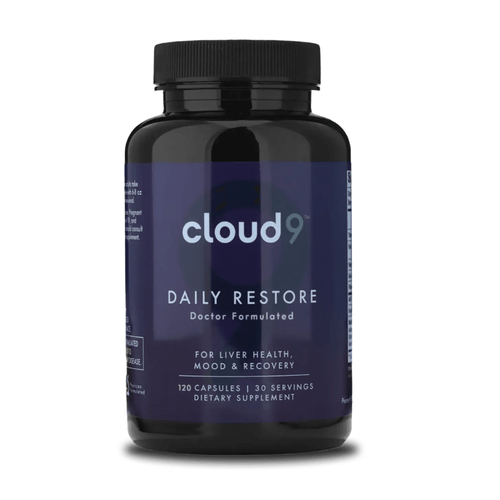
Cloud9 Daily Restore combines NAC, DHM, milk thistle, B vitamins, and ashwagandha to help support the pathways alcohol can tax most. Two capsules daily, drinking or not.
NAC | DHM | Milk Thistle | B Vitamins | Ashwagandha
See How Daily Restore WorksThe Questions That Cut Through the Noise
Self-honesty starts with asking questions that bypass your automatic defenses. These aren't "yes or no" questions designed to diagnose, they're invitations to notice what's actually happening in your life.
Questions About Control and Choice
Pay attention to how much mental energy your drinking occupies. If you find yourself making plans around when you can drink, feeling anxious about events without alcohol, or frequently negotiating with yourself about "just one more," these patterns deserve your attention.
- Do you think about drinking at specific times of day, even when you're not actively craving it?
- Have you set limits for yourself that you consistently exceed?
- Do you feel uncomfortable or defensive when others comment on your drinking?
- Have you tried to cut back but found it harder than expected?
- Do you drink more than you initially intended on a regular basis?
Questions About Physical and Emotional Impact
Your body provides honest feedback, even when your mind tries to rationalize. Notice how you actually feel the morning after drinking, not how you tell yourself you'll feel when you pour that first glass.
- How's your sleep quality on nights when you drink versus nights you don't?
- Do you wake up feeling genuinely rested, or foggy and depleted?
- Have you noticed changes in your weight, skin, digestion, or energy levels?
- Are you using alcohol to manage stress, anxiety, or uncomfortable emotions?
- Do you feel more like yourself when you're drinking or when you're not?
Questions About Life and Relationships
Sometimes the clearest signs show up in how drinking affects what you care about most. These questions can reveal whether alcohol is supporting your life or quietly undermining it.
- Have you skipped activities, workouts, or commitments because of drinking or hangovers?
- Do your loved ones express concern about your drinking, even casually?
- Are you showing up as the parent, partner, or friend you want to be?
- Has drinking affected your work performance or professional goals?
- Do you hide how much you drink from certain people in your life?
The Two-Week Tracking Exercise
Abstract questions can only take you so far. Concrete data provides clarity that's harder to dismiss. Try tracking your drinking for two weeks without changing your habits, just observing and recording.
What to Track
Keep a simple log that captures more than just quantity. Note the context, your emotional state before and after, and how you feel the next day. This fuller picture often reveals patterns you haven't noticed.
| What to Record | Why It Matters |
|---|---|
| Number of drinks and actual pour size | Home pours are often 2-3 times standard serving sizes |
| Time of day and duration | Reveals automatic timing patterns and rituals |
| Where you were and who you were with | Identifies social or environmental triggers |
| Your emotional state beforehand | Shows if you're using alcohol to cope with feelings |
| Sleep quality and next-day energy | Connects drinking to tangible wellbeing impacts |
| What you did instead of other activities | Highlights opportunity costs and displaced priorities |
What the Data Usually Reveals
Most people are surprised by their tracking results. The total weekly number is often higher than estimated. Patterns become visible, like drinking primarily when stressed or bored, not just socially.
You might notice that you feel significantly better on non-drinking days, or that alcohol affects your sleep more than you realized. These concrete observations are harder to rationalize away than vague concerns.
Reading the Physical Signs Your Body Is Sending
Your body offers honest feedback about your drinking, often before your mind is ready to acknowledge concerns. Learning to recognize and respect these signals can provide valuable information for your self-assessment.
Sleep Disruption
Alcohol might help you fall asleep faster, but research consistently shows it degrades sleep quality. You spend less time in REM sleep, the restorative phase crucial for memory, mood regulation, and cognitive function. If you're waking up at 3 AM regularly or never feeling truly rested, alcohol may be the culprit.
Energy and Mood Fluctuations
Notice if your baseline energy and mood have gradually declined. Alcohol affects neurotransmitter balance, particularly dopamine and serotonin. Regular drinking can create a cycle where you feel more anxious or low, then drink to relieve those feelings, which perpetuates the pattern.
Digestive and Physical Changes
Your digestive system responds directly to alcohol consumption. Bloating, acid reflux, irregular bowel movements, or stomach discomfort can all signal that your body is struggling to process your drinking habits. Skin changes like redness, dryness, or premature aging are also common indicators.
The most honest conversation you can have with yourself isn't about whether you're drinking "too much" by some external standard. It's about whether your current relationship with alcohol aligns with who you want to be and how you want to feel.
Moving From Awareness to Action
Once you've completed your honest self-assessment, you have valuable information. The next step isn't necessarily dramatic, it's about choosing what feels right based on what you've learned.
If You Recognize Concerning Patterns
Recognizing that your drinking has become problematic takes courage. This awareness is actually a strength, not a failure. Consider whether you want to try moderating on your own, take a temporary break to reset, or seek support from a program or professional.
Many people find that a structured break, whether 30 days or longer, provides clarity that's hard to achieve while still drinking. It allows your body and brain to recalibrate and gives you a baseline for comparison.
If You Want to Moderate More Effectively
If you decide that moderate drinking still fits your life, use your tracking insights to create specific boundaries. Set drink limits before you start, not in the moment. Create alcohol-free days each week. Have a plan for how you'll handle triggers you identified.
- Alternate alcoholic drinks with water or other beverages
- Eat before and while drinking to slow absorption
- Choose lower-alcohol options or make intentional decisions to drink less
- Find alternative ways to unwind or socialize that don't center on alcohol
- Regularly reassess whether your moderation plan is actually working
Creating Accountability
Self-honesty is easier to maintain when you have external support. Share your intentions with someone you trust. Consider working with a therapist, joining a support group, or using apps designed to help track and moderate drinking. Accountability doesn't mean shame, it means having witnesses to your commitment.
How Daily Restore Supports Your Health
Understanding what your body needs is one thing. Getting consistent daily support is another. Daily Restore was designed to address the key pathways alcohol can stress most, in one simple daily formula.
NAC (N-Acetyl Cysteine)
Supports glutathione production and antioxidant defenses
DHM (Dihydromyricetin)
Supports alcohol metabolism
Milk Thistle (Silymarin)
Supports healthy liver function
B Vitamins
Help replenish nutrients involved in energy and metabolism
Ashwagandha
Supports stress resilience and healthy cortisol balance
Daily Restore is not a detox or a cure. It is a daily support formula designed for people who drink socially and want to give their body consistent, evidence-informed support.
Frequently Asked Questions
How do I know if I'm drinking too much?
If you find yourself drinking more than you intended, feeling guilty about your consumption, or noticing that alcohol is interfering with your responsibilities or relationships, these can be signs worth examining. The CDC defines moderate drinking as up to one drink per day for women and up to two for men, though individual needs and health considerations vary.
What's the difference between heavy drinking and alcohol dependence?
Heavy drinking refers to consuming more than the recommended limits on a regular basis, while alcohol dependence involves physical or psychological reliance on alcohol. Dependence often includes withdrawal symptoms when not drinking, difficulty controlling intake, and prioritizing alcohol over other activities. If you're experiencing signs of dependence, consulting a healthcare provider is an important step.
Can I cut back on my own, or do I need professional help?
Many people successfully reduce their drinking through self-directed changes, especially if their consumption hasn't yet caused significant physical or psychological dependence. However, if you've tried cutting back unsuccessfully, experience withdrawal symptoms, or have underlying health conditions, working with a healthcare professional can provide safer guidance and support tailored to your situation.
How long does it take to see benefits from reducing alcohol intake?
Many people notice improvements in sleep quality and energy levels within the first week of cutting back. Benefits like better mood regulation, clearer thinking, and improved physical health often become more apparent over several weeks to months. The timeline varies depending on your previous consumption levels and individual health factors.
What if my social life revolves around drinking?
Changing your relationship with alcohol when your social circle centers on drinking can feel challenging, but it's absolutely possible. Consider suggesting alternative activities, finding new social groups aligned with your wellness goals, or being honest with supportive friends about your intentions. You might be surprised to find others who also want to drink less but haven't spoken up.
The Bottom Line
Having an honest conversation with yourself about alcohol doesn't require judgment or shame. It simply means checking in with how drinking fits into your life and whether it's serving your long-term health and happiness. Whether you're looking to cut back, take a break, or reassess your habits, approaching the conversation with curiosity rather than criticism can make the process feel more manageable.
Small, consistent steps often create more lasting change than dramatic overhauls. Setting clear intentions, tracking your patterns, and building supportive routines can help you maintain the changes you want to make. Remember that progress isn't always linear, and being kind to yourself along the way matters just as much as the goals you set.
Supporting your body during this process can make a meaningful difference in how you feel day to day. Cloud9's Daily Restore provides targeted nutrients that may help support your wellness routine, whether you're cutting back on alcohol or simply prioritizing better overall health. With DHM, milk thistle, and essential vitamins, it's designed to work alongside the positive changes you're making.
Your relationship with alcohol is deeply personal, and only you can determine what balance feels right. By staying honest with yourself, seeking support when needed, and making intentional choices that align with your values, you're already taking important steps toward a healthier, more fulfilling life.
Build Your Daily Support Routine
Build Your Daily Support Routine
If drinking is part of your lifestyle, your support routine should not be random. Daily Restore was designed to help social drinkers support liver health, antioxidant defenses, alcohol metabolism, nutrient replenishment, and daily recovery in one simple routine.
NAC
DHM
Milk Thistle
B Vitamins
Ashwagandha